
How to efficiently machine shaped parts on CNC mill-turn machines?
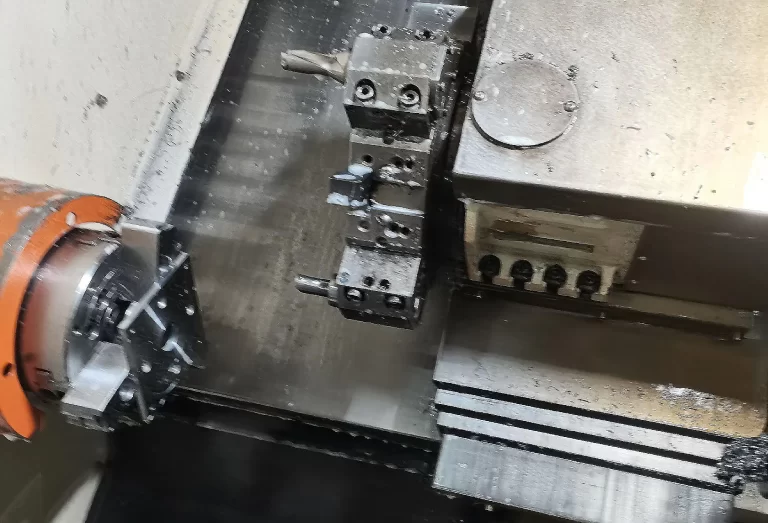

Automotive parts manufacturing serves as the technological foundation and industrial backbone of the automotive industry;
Its manufacturing standards directly determine the performance, safety, and market competitiveness of finished vehicles.
Currently, the automotive industry is undergoing a period of unprecedented transformation in a century;
Growth momentum in the traditional automotive parts sector is gradually waning, while supply chain systems and value distribution rules are being rapidly restructured.
According to the *2025 Global Automotive Parts Supplier Study* jointly released by Roland Berger and Lazard, the global parts industry has entered a “period of stagnation and transformation.”
Traditional growth drivers are gradually fading, while the establishment of a new order remains incomplete.
Parts manufacturers are simultaneously facing the dual uncertainties of shrinking traditional business and technological transformation.
Against this backdrop, Chinese parts manufacturers have maintained EBITDA margins among the highest globally, emerging as a force to be reckoned with in the global automotive supply chain.
Meanwhile, power battery shipments have surpassed the TWh level (1 TW·h = 1 billion kW·h).
Cell energy density is steadily increasing. Semi-solid-state batteries are on the verge of mass production.
Technological breakthroughs in all-solid-state batteries are accelerating.
In the field of lightweighting, breakthroughs in large-scale integrated die-casting technology have significantly improved the manufacturing efficiency of new energy vehicle assemblies.
Research and development efforts in the fields of semiconductors and operating systems are also accelerating.
Meanwhile, China’s self-sufficiency rate for domestically produced automotive-grade chips continues to rise.
China’s automotive and parts manufacturing industries are accelerating their strategic transition from a “scale-oriented” to a “capability-oriented” approach.
A systematic review of the current state of industrial development is essential.
Coupled with an analysis of trends in key technologies and the competitive landscape, it holds significant theoretical and practical importance for propelling China’s transition from a manufacturing powerhouse to a technological powerhouse.
By the end of 2025, China’s auto parts market accounted for approximately 35% of the global total.
It had formed an industrial landscape characterized by the coordinated development of six major industrial clusters:
The Yangtze River Delta, the Pearl River Delta, the Beijing-Tianjin-Hebei region, Northeast China, Central China, and the Chengdu-Chongqing region.
According to data released by the China Association of Automobile Manufacturers, the production and sales of new energy vehicles continued to grow in 2025, with market penetration rates steadily increasing.
From an industry-wide perspective, China has become the world’s largest market and a major supply hub for new energy vehicles;
However, the industry remains in a process of continuous exploration and adjustment regarding the in-depth penetration of vehicle models and pricing, as well as their alignment with income levels.
Research indicates that China’s vehicle exports are shifting from a product-led approach to a system-based export model.
The integration capabilities of domestic brands in hybrid technology and intelligent platforms are increasingly becoming a key pillar for expanding overseas markets.
During the transition to electrification, technological innovations have yielded remarkable results.
These innovations are represented by lightweight materials and processes, such as the development of ultra-high-strength materials and integrated die-casting.
In the field of ultra-high-performance materials, Chery Automobile collaborated with Hebei Iron & Steel Group to develop automotive hot-formed steel sheets with a tensile strength of up to 2,400 MPa.
This development provides a new material solution for enhancing safety and further reducing the weight of future passenger car bodies.
In the field of integrated die-casting, the Zhi Jie V9 made its global debut with “electromagnetic thermal control die-casting technology.”
This technology completely breaks away from the traditional logic of “the higher the tonnage, the better” in integrated die-casting, a logic driven by brute force and internal competition.
It integrates the synergistic innovation of electromagnetic technology and a nano-thermal control layer.
As a result, it propels die-casting from the “era of mechanical brutality” into the “era of scientific precision control.”
This represents not only an evolution of the die-casting process but also a fundamental technological revolution—a leap from the “mechanical paradigm” to the “electromagnetic-thermodynamic paradigm.”
In the field of smart manufacturing, AI vision inspection systems have been deployed in critical processes such as welding and battery pack adhesive application.
These systems significantly reduce the error and omission rates associated with manual visual inspections.
They also achieve near-complete online monitoring of key process quality metrics, including weld points and adhesive application surfaces.
Based on the concept of the digital twin proposed by GRIEVES and others—that is, the theoretical foundation of using virtual models to drive production decisions—automotive manufacturers are incorporating digital twins into production line layout design, manufacturing process simulation, and process parameter optimization.
As a result, they have significantly shortened the production preparation process that previously required multiple rounds of physical prototyping.
At the same time, data-driven optimization strategies and the collaborative integration of networked robots with automated machining systems are increasingly becoming core tools for automotive parts manufacturers to reduce costs and improve efficiency.
These developments are driving the overall automotive manufacturing industry toward greater flexibility, transparency, and predictive operations and maintenance.
The global automotive parts supplier landscape is undergoing profound changes.
Automotive News released its 2025 list of the world’s top parts suppliers.
Compared to 2024, the number of Chinese companies on the list continues to rise.
This shift reflects a market transition from traditional parts to emerging parts sectors, where the “strong get stronger” while emerging cross-industry players are on the rise.
The performance of Chinese parts companies is not uniform.
A small number of companies that possess core technologies and have proactively positioned themselves in the electrification and intelligentization sectors are experiencing strong profit growth.
In contrast, the majority of small and medium-sized enterprises (SMEs), which still primarily focus on traditional parts production, face severe survival pressures and market squeeze.
In its research, Roland Berger noted that Chinese auto parts suppliers’ EBITDA margins rank relatively high globally.
This disparity stems from a unique combination of electrification penetration patterns in the Chinese market, local industrial support programs, and international production capacity.
Regarding industry transformation, numerous specialized journals continue to report on advanced manufacturing processes and material applications centered on lightweighting and smart manufacturing technologies.
These developments are driving the shift in automotive manufacturing from “experience-driven” to “data-driven.”
Against the backdrop of the full-scale push toward electrification, the issue of heavy reliance on international markets for key upstream minerals such as lithium, cobalt, and nickel is becoming increasingly prominent.
This dependence has become a growing challenge for the industry.
The continuous rise in lithium-ion battery installations is highlighting the vulnerability of resource supply;
Should geopolitical tensions or trade disputes arise, the risk of supply disruptions would directly threaten the stable operation of China’s auto parts manufacturing system.
In the semiconductor sector, automotive-grade MCUs (Microcontroller Units) and smart cockpit SoCs (Systems on Chip) have achieved breakthroughs with certain brands.
However, the supply of core control chips at the system level and with high functional safety ratings remains heavily reliant on foreign sources.
This constrains the large-scale domestic production of core controller platforms under the new EEA (Electrical/Electronic Architecture) framework.
In the realm of operating systems and foundational software, discussions regarding open-source architecture alternatives such as RISC-V are becoming increasingly active.
This trend indicates that the industry has recognized the long-term risks posed by the fragmentation of the underlying system ecosystem and insufficient innovation collaboration.
The level of autonomy and control over vehicle computing platforms and supporting software stacks designed for advanced autonomous driving and vehicle-road-cloud coordination technologies remains low at present.
The automotive industry is facing particularly significant profit pressures.
Prices for upstream basic raw materials such as aluminum, copper, and steel have remained at high levels.
As a result, parts manufacturers are caught between rising raw material costs and price pressures from original equipment manufacturers (OEMs).
This situation has squeezed their profit margins.
As subsidies for new energy vehicles are gradually phased out, structural oversupply resulting from the expansion of power battery production capacity has caused sharp short-term fluctuations in industry profits.
Consequently, many second- and third-tier companies are struggling to align production with sales.
The pressure on companies to cut costs and improve efficiency stands in sharp contrast to the demands of technological advancements such as “software-defined vehicles.”
Driven by price wars, some automakers have further worsened payment terms and settlement cycles for their suppliers.
At the same time, fluctuations in trade policies in Europe and the United States—particularly the potential shift in tariff frameworks—pose significant risks of global market volatility.
These uncertainties create a long-term source of risk for automotive parts exports.
The rapid rise in the penetration rate of smart electric vehicles has directly led to increasingly rapid product lifecycle iterations for traditional internal combustion engine (ICE) auto parts manufacturers.
Demand for traditional components—such as engine blocks, transmissions, and exhaust and fuel systems—has plummeted.
As a result, suppliers in these sectors are being forced to undergo technological upgrades or restructure their production capacity.
Within the industry, the automotive parts sector remains relatively fragmented.
It consists of a large number of small and medium-sized manufacturers, particularly within major industrial clusters, and exhibits significant product homogenization.
According to surveys, more than half of small and medium-sized parts manufacturers face talent shortages.
They also lack the technical capabilities to tackle key challenges.
The trend among vehicle manufacturers to build their own facilities or deepen their expertise in core components has further weakened the bargaining power of external suppliers.
The delicate balance between supply and demand, along with the shifting dynamics of influence, will have a long-term impact on the industry’s competitive landscape.
Roland Berger’s research indicates that global production has stagnated in Europe and the United States.
Meanwhile, China and countries in the Global South are gradually becoming the engines driving demand for automotive parts.
The uncertainty regarding technology adaptation strategies and investments in specialized facilities resulting from this regional divide has exacerbated efficiency frictions amid structural transformation.
The global deployment of automotive parts has become a key direction for the industry’s development.
Thanks to their comprehensive advantages in cost and product delivery, Chinese parts manufacturers have secured a certain market share in both Europe, the United States, and the Asia-Pacific region.
However, this trend has been accompanied by increasingly stringent tariff policies, carbon border adjustment mechanisms, and local government supply chain incentive provisions.
These measures constrain deep integration into global regional supply chains.
As a result, they place severe pressure on supply chains to rebalance toward localization.
In terms of export composition, the trend of vehicle exports driving parts exports is becoming increasingly clear.
However, export barriers for key assemblies containing intellectual property—such as powertrains and electronic control units—have yet to be effectively resolved.
The issue of low integration levels within the value chain in international markets also remains unresolved.
Exports are shifting from simple product exports to technology transfer and production capacity cooperation.
Accordingly, companies are making dynamic adjustments to adapt their overseas supply strategies.
The interdependent structure of upstream materials, manufacturing equipment, and key components in the global industrial chain has been severely disrupted by politicized factors.
As a result, the trade-off between security and efficiency has become a primary consideration in the international strategic layout of parts production.
Consequently, Chinese parts manufacturers have been forced to adjust their production network organization, which was previously driven solely by material costs.
They are shifting toward more complex manufacturing configurations characterized by multiple centers, multiple nodes, and regionally self-contained systems.
Electrification and intelligence are advancing toward a higher-level integrated “vehicle-energy-road-cloud” ecosystem.
As a result, automobiles are transforming from traditional modes of transportation into smart mobile terminals, energy storage carriers, and data exchange hubs.
Now that power battery production has surpassed the TWh mark, the focus has expanded beyond the energy density of individual battery cells.
It now encompasses multiple dimensions, including pack efficiency, cycle life, safety alerts, and the integration of user big data.
Multiphysics and multiscale modeling and simulation for electrochemical modeling and battery cell design are being widely explored.
Digital, holistic management mechanisms are also being used to enhance performance prediction across the entire battery lifecycle.
Regarding intelligent components, large-scale AI models are being fully integrated with autonomous driving domain controllers and smart cockpit chips.
Consequently, hardware requirements for LiDAR, high-precision positioning modules, computing platforms, and automotive-grade storage chips are rapidly increasing.
Currently, competition in computing power coexists with falling costs.
This trend will drive the evolution of high-level intelligent driving components and systems toward greater cost-effectiveness.
Intelligent technologies are also accelerating their penetration into advanced manufacturing processes.
Precision automated inspection stations equipped with highly sensitive sensors and digital twin-assisted process control systems have begun to be deployed in the factories of some leading component manufacturers.
These technologies have significantly shortened the cycle time for flexible production line adjustments.
In addition to participating in the upgrading of traditional powertrain components, parts manufacturers are increasingly focusing on research and development for next-generation intelligent system modules.
These modules integrate electronics, sensors, and algorithms.
Collaboration between automakers and parts suppliers has become closer than ever due to the restructuring of software and hardware architectures.
As a result, products are required to be defined with integrated hardware and software considerations starting from the conceptual design phase.
The relationship between original equipment manufacturers (OEMs) and suppliers is evolving from a traditional procurement and supply arrangement toward a co-creation platform.
To gain control over integrated products, OEMs are fundamentally breaking away from the loose, parts-list-based management model of the past.
They are shifting toward deeper engagement and closer ties with suppliers.
Led by branded vehicle manufacturers, the definition of underlying platforms and architectures allows parts suppliers to participate in early-stage research and development.
This enables both parties to jointly avoid losses caused by issues such as system incompatibility.
This approach shortens validation cycles during engineering development through pre-integration.
As a result, it significantly improves development efficiency.
On one hand, leading parts manufacturers are moving beyond their traditional role as module suppliers.
They are becoming system integrators by offering comprehensive “chip + software + actuator + cloud services” solutions.
On the other hand, startups are collaborating with traditional giants on research and development.
Together, they are shaping more aggressive iteration paths for next-generation automotive electronics, chassis systems, and operating systems.
Full-stack innovation helps reduce product costs and enables rapid upgrades, but it also places extremely high demands on suppliers’ technological breadth.
The early involvement of parts manufacturers in vehicle R&D departments will further optimize the efficiency of the entire manufacturing chain.
At a critical juncture in the regional restructuring of global industrial chains, Chinese automotive parts companies have begun to pursue a “dual-track” approach to globalization.
On the one hand, leveraging the advantages of a massive domestic market and a mature supplier system, companies continue to consolidate their cost advantages in procuring mature products such as chassis and electric drive systems domestically.
They also export standardized parts overseas. On the other hand, they are stepping up the construction of localized manufacturing plants in regions with emerging automotive production capacity, such as Eastern Europe, North America, and Southeast Asia.
This enables them to provide nearby supply support for automakers’ overseas production bases, thereby circumventing trade barriers and tariff costs.
This logic is driving Chinese parts manufacturers away from a strategy of simply exporting vehicles assembled domestically.
Instead, they are deeply embedding themselves in overseas industrial clusters through technology licensing, joint ventures, mergers, and acquisitions.
At the same time, they are elevating their products’ position in the value chain.
Strong global demand for electrification systems and smart components will also drive “Chinese solutions” for certain products to gradually capture more market segments internationally.
Chinese multinational parts manufacturers are planning the regional allocation of their resources according to new geopolitical patterns to ensure the regional adaptability of key processes and warehousing.
As the automotive industry’s digital transformation moves from isolated pilot projects to a systematic rollout, smart manufacturing is expanding from high-quality benchmarks to large-scale implementation.
The widespread adoption of the Industrial Internet of Things (IIoT) and predictive maintenance systems has already enabled parts manufacturers to achieve significant improvements in the overall efficiency of their critical equipment.
These improvements are supported by data collection, data transparency, and real-time alerts.
Digital twin technology is beginning to go beyond simulation.
It is now driving dynamic decision-making throughout the entire production process, including process path selection, quality-coupled control, and the adjustment of collaborative robot parameters.
At the same time, the integration of artificial intelligence and big data has further enhanced the flexible quality inspection capabilities and closed-loop quality prediction capabilities of manufacturing plants.
As a result, first-pass yield rates have increased significantly, while rework costs have been reduced.
A handful of leading companies have begun experimenting with process planning and dynamic production line adjustments based entirely on virtual models.
This approach helps address the challenges posed by order fluctuations.
Differentiation in smart manufacturing capabilities within the automotive parts sector will become a critical factor in distinguishing corporate competitiveness.
Therefore, companies must implement phased data governance and integrate traditional production lines to maintain cost and quality advantages in the face of intense market competition.
Digital transformation will drive the continuous evolution of manufacturing models toward human-machine collaboration and end-to-end data-driven processes.
Based on the above analysis, systematic efforts should be made across multiple dimensions to promote the high-quality development of China’s automotive and auto parts manufacturing industries.
These dimensions include strategy, technology, industrial synergy, supply chains, and global operations.
First, accelerate the development of independent and controllable capabilities in key core technologies and fundamental components.
Focus on power chips, high-performance microcontrollers, and power management modules.
Prioritize strengthening automotive-grade manufacturing processes and reliability testing capabilities.
Simultaneously advance the development of foundational materials and underlying software.
Establish an integrated hardware-software collaborative innovation platform tailored to domestic architectures.
Second, in the fields of lightweighting and integrated manufacturing, focus on the backward-compatible engineering of cutting-edge technologies.
Promote the iterative development of high-quality battery casings, large-scale integrated chassis die-casting, and magnesium-aluminum alloy forming technologies by leading Chinese enterprises.
At the same time, develop high-strength, high-toughness heat-treatment-free aluminum alloys and high-strength hot-formed steel sheets.
Advance the independent research and development of core materials.
This will help address current import shortfalls and meet the lightweighting, safety, and cost requirements of the next generation of new energy vehicles.
Third, cultivate a high-value-added smart manufacturing ecosystem.
This can be achieved by thoroughly implementing full-factor digital simulation, AI-driven process optimization, and the development of flexible, adaptive production line systems.
This will promote consistency and coordination between the CNC adoption rate in key processes and quality standards.
It will also achieve end-to-end data integration and information sharing across the entire supply chain.
In addition, it will enhance agility in responding to user needs.
Fourth, establish a diversified and dynamic supply chain management model by fully integrating intelligent multi-level inventory planning with regionalized node allocation.
Flexibly employ a dual-track approach that combines globalization and regionalization to hedge against external environmental volatility.
Promote early and collaborative supplier participation in automakers’ initial forward-design processes.
At the same time, enhance product localization.
Fifth, strengthen the innovation support system for talent strategies.
Build a capability chain specifically geared toward engineering innovation.
Enhance vocational education, industry-specific training, and multi-level talent development.
In addition, attract cross-disciplinary resources, such as those in materials science and computer science, to jointly build a new generation of high-caliber teams.
Sixth, enhance compliance and public opinion management in the company’s international projects; study various international trade treaties and carbon data rating mechanisms;
And actively establish overseas industrial clusters and conduct research on cutting-edge new energy technologies.
This not only facilitates technological innovation and access to cutting-edge information resources but also provides the Chinese automotive industry with a transnational space for sustainable development.
China’s automotive and auto parts manufacturing industry is currently undergoing a critical transition.
It is evolving from size to strength and shifting from a price-driven strategy to a leap in capabilities.
Although the global automotive supply chain is undergoing a period of transformation and turbulence, China’s robust industrial foundation, strong demand for innovation, and comprehensive manufacturing system have created a historic window of opportunity for the comprehensive rise of domestic brands.
Looking ahead, the industry should deepen the integration of electrification and intelligent technologies.
It should also focus on collaborative innovation across the entire industrial chain.
Furthermore, it should further solidify China’s leading edge in lightweighting and smart manufacturing.
Finally, it should pursue upgrades through high-level global resource allocation.
Together, these efforts will serve as the core pillars for the industry to overcome current challenges and achieve leapfrog development.
By balancing independent innovation with open cooperation, China’s automotive parts manufacturing sector will elevate its role and make a historic leap forward within the global industrial value chain.
With the rapid development of the modern manufacturing industry, the…

Easy to deform thin-walled parts processing, has been the processing…
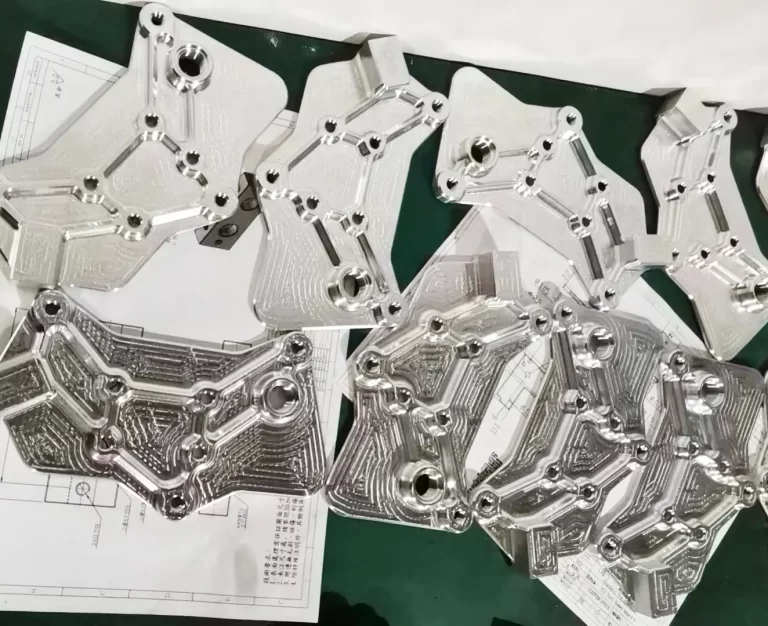
Now we attach importance to the design of intelligent agricultural…